Sep 17, 2026•10 min read
ADNOC and the Long Goodbye: Running a Hydrocarbon Economy in a Decarbonising World
"A barrel left in the ground for fifty years may be worth less than a barrel sold this decade. That single sentence explains far more of Abu Dhabi’s energy strategy than any slogan."
By Shashi S. Piptan
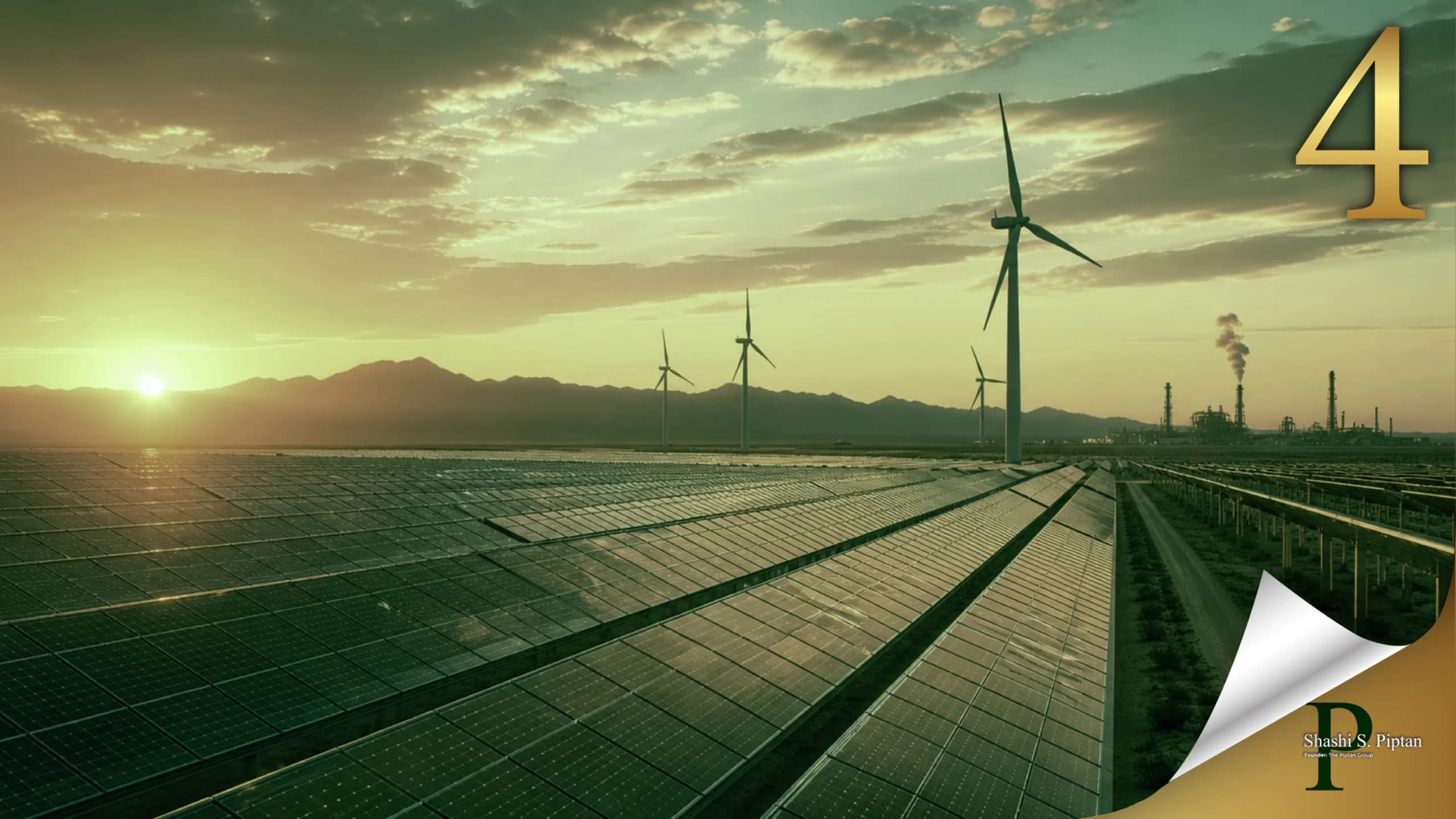
THE ABU DHABI SERIES · THE ECONOMIC HISTORY AND FUTURE OF ABU DHABI Arc II: The Present Economy, Assessed Rather Than Celebrated
Every serious observer of Abu Dhabi eventually arrives at the same apparent contradiction, and most resolve it too quickly. The Abu Dhabi National Oil Company is simultaneously expanding its capacity to produce hydrocarbons and committing, ahead of its peers, to decarbonise. Critics call this hypocrisy. Boosters call it pragmatism. I think both responses are attempts to escape a genuine dilemma that does not actually have a comfortable resolution, and the honest thing to do is to sit inside the contradiction rather than explain it away. This article takes no side on the underlying climate politics. It tries instead to describe, fairly, the real dilemma a low-cost hydrocarbon producer faces when the world it sells into has begun, slowly and unevenly, to move away from its product.
The expansion is real, and so is the decarbonisation
Both halves of the contradiction are documented, so let me establish them before I weigh them. On the expansion side, ADNOC has been driving its production capacity from under 4 million barrels per day in 2020 toward a target of 5 million by 2027, reaching roughly 4.85 million by 2024, supported by a capital programme running to around 150 billion US dollars. It has expanded gas and liquefied natural gas, and in 2024 it launched XRG, an international lower-carbon energy and chemicals investment company with an enterprise value exceeding 80 billion dollars, which by 2026 had consolidated major petrochemicals businesses beneath it. This is not the behaviour of a company winding down. It is the behaviour of one intending to produce more, for longer, and to capture more of the value chain while doing so.
The gas dimension deserves particular emphasis, because it complicates any simple picture of a company clinging to yesterday’s fuel. A large part of the expansion is directed at natural gas and liquefied natural gas, including major new LNG capacity on the Gulf coast, driven by a strategic goal of gas self-sufficiency and by the calculation that gas will play a longer role in the transition than crude, as a lower-carbon complement to renewables and a feedstock for hydrogen and chemicals. Whether one regards gas as a genuine bridge fuel or as a hydrocarbon by another name is precisely one of the contested questions of the energy transition, and I will not adjudicate it here. But it is important to see that Abu Dhabi’s expansion is not a simple doubling-down on oil; it is a deliberate tilt toward the parts of the hydrocarbon complex it judges most durable.
On the decarbonisation side, the commitments are equally concrete and, in their timing, genuinely ahead of the company’s peer group. ADNOC has brought forward its target for net-zero operational emissions to 2045, from a previous 2050, and set a goal of zero routine methane emissions by 2030, alongside a target to cut the carbon intensity of its operations by a quarter by 2030. It is expanding carbon capture and storage, most notably at Habshan, toward 5 million tonnes of carbon dioxide a year by 2030, electrifying offshore operations with clean grid power, and building positions in hydrogen and low-carbon ammonia. These are real programmes with real capital behind them, not press-release aspirations, and they place the company at the more forward-leaning end of the national oil company spectrum.
The exit from OPEC, and what it revealed
A recent decision brought the underlying logic into the open more sharply than any sustainability report. On the twenty-eighth of April 2026, the UAE announced its withdrawal from OPEC and the wider OPEC+ alliance, effective the first of May 2026, ending a membership that dated to 1967. The stated rationale was national interest and production flexibility, and the structural cause was long-standing: the UAE’s OPEC+ production quota, in the region of 3.5 million barrels per day, had for years sat well below the capacity ADNOC had spent heavily to build, leaving the emirate obliged to keep more of its capacity idle than any other member. Independent analysts placed its capacity utilisation in 2025 at around two thirds, notably lower than its regional peers.
I present the exit neutrally, because its politics are contested and not my subject. But its economic meaning is directly relevant to the dilemma of this article. Leaving OPEC frees Abu Dhabi to produce closer to its capacity and to prioritise market share and revenue over coordinated price support. It reveals a strategic choice: the emirate appears more willing than some of its neighbours to accept lower prices in exchange for volume and structural positioning, monetising its reserves while they still command strong demand rather than restraining output to defend price. That is a coherent strategy for a low-cost producer that believes the long-term value of its reserves is more at risk from the energy transition than from short-term price weakness. It is also, unmistakably, a decision to lean into hydrocarbon production at the very moment the company is promising to decarbonise it.
The exit brought into the open a widening divergence within the Gulf that is worth naming plainly and neutrally. Saudi Arabia, carrying the immense fiscal demands of its own transformation programme, has generally prioritised higher and more stable oil prices, which implies production restraint. Abu Dhabi, with a lower fiscal breakeven and a different reading of the future value of its reserves, has shown itself more willing to accept lower prices in exchange for volume and market share. These are not moral positions but different judgements about the same uncertain future, reached by two states with different balance sheets and different assumptions. That two of the region’s most important producers now diverge this openly on the fundamental question of price versus volume is among the more consequential shifts in Gulf energy politics, and it forms part of the regional picture I return to in the final article of this series.
A barrel left in the ground for fifty years may be worth less than a barrel sold this decade. That single sentence explains far more of Abu Dhabi’s energy strategy than any slogan.
Why the contradiction is rational, not hypocritical
Here is the argument that dissolves the charge of simple hypocrisy, and I make it not to defend the emirate but because I think it is analytically correct. If you genuinely believe the world will consume less oil over the coming decades, the rational response as a low-cost producer is not to slow down. It is, counter-intuitively, to accelerate: to monetise your reserves while demand and prices remain strong, because a barrel left in the ground for fifty years, in a decarbonising world, may be worth far less than a barrel sold this decade, or worth nothing at all if it becomes stranded. Under that logic, expanding production and preparing for the transition are not contradictory. They are two halves of the same bet, which is that the value of hydrocarbon reserves is a wasting asset that must be converted into permanent capital before its window narrows.
This is where the sovereign wealth architecture from the earlier article reconnects. The purpose of maximising hydrocarbon value now is to fund the diversification that must outlast hydrocarbons later. Abu Dhabi is, in effect, trying to run down one asset and build up another simultaneously, using the proceeds of the first to pay for the second, in a race against the clock of the transition. Seen this way, the apparent contradiction is a deliberate sequencing strategy. That does not make it certain to succeed, but it does make it rational, and it deserves to be understood on those terms rather than dismissed.
The genuine dilemma, held honestly
Rational, however, is not the same as safe, and a balanced account has to name the real risks the strategy carries. The first is timing. The whole approach depends on selling reserves before demand falls faster than expected. If the transition accelerates beyond current projections, the later, higher-cost tranches of the expansion could underperform the assumptions on which they were sanctioned. The second is credibility. Pursuing aggressive production growth and ambitious decarbonisation at the same time invites the reasonable question of whether the second is subordinate to the first, and whether net-zero-by-2045 for operational emissions, which notably excludes the emissions from the eventual burning of the exported product, is a meaningful climate commitment or a narrower operational one. That distinction is fair to raise, and I raise it without answering it, because reasonable people weigh it differently.
The newer low-carbon businesses invite a similar sobriety. Hydrogen and low-carbon ammonia are genuine and serious programmes, and the global market for them may grow substantially over the coming decades. But that market is still immature, its economics remain uncertain, and much of the demand depends on policy and infrastructure in other countries that Abu Dhabi does not control. It is entirely reasonable to build early positions in these fuels as options on a plausible future. It is equally reasonable to note that they are, as yet, options rather than established businesses, and that the scale of today’s hydrocarbon expansion dwarfs them. An honest reading treats the low-carbon investments as serious hedges being constructed with real intent, not as evidence that the transition is already being delivered at scale.
The third element is not a risk so much as a hard-headed strength that the 2026 regional disruption exposed. Abu Dhabi has invested in infrastructure, most visibly the Habshan-to-Fujairah pipeline, that allows a substantial volume of crude to bypass the Strait of Hormuz entirely and reach international markets from the Gulf of Oman coast. In a year when the strait’s security was in question, that piece of unglamorous engineering did more for the emirate’s resilience than any strategy document. It is a reminder that in energy, physical logistics often matter more than rhetoric, a theme I return to in the article on the long energy game.
A goodbye measured in decades
The title of this article calls it a long goodbye, and I chose the phrase carefully. Abu Dhabi is not leaving oil, and nothing in its current behaviour suggests it intends to soon. It is doing something more subtle and, I think, more interesting: extracting maximum value from hydrocarbons over what it judges to be a closing window, while using that value to build the sovereign capital and the new industries meant to carry the economy once the window shuts. The expansion and the decarbonisation are not evidence of confusion. They are evidence of a producer that has looked honestly at the transition and concluded that the way to survive it is to run toward its own product, not away from it, for as long as the running is profitable.
Whether that judgement proves correct will not be known for many years, and I will not pretend to know it now. What I can say is that the strategy is coherent, that it carries genuine and unhedgeable risks of timing and credibility, and that it embodies, more sharply than anything else in the emirate’s economy, the central tension of a hydrocarbon state in a decarbonising world. The honest posture is to hold both truths at once: that Abu Dhabi is preparing responsibly for a lower-carbon future, and that it is simultaneously betting heavily that the demand for its barrels has years of strength left in it. Both are true. The goodbye is real, and it is long, and how long is the one thing no one can yet verify.